
Scott's Story
Scott shares his story of losing his father to suicide at age seven, the lifelong impact of grief, and why talking about loss helps to heal.
Scott shares his story of losing his father to suicide at age seven, the lifelong impact of grief, and why talking about loss helps to heal.
"Do not bottle it up or avoid it. Deal with it head on and process the trauma upfront. It will be hard, but it will significantly help in the long term and prevent it from defining your life."
About Scott:
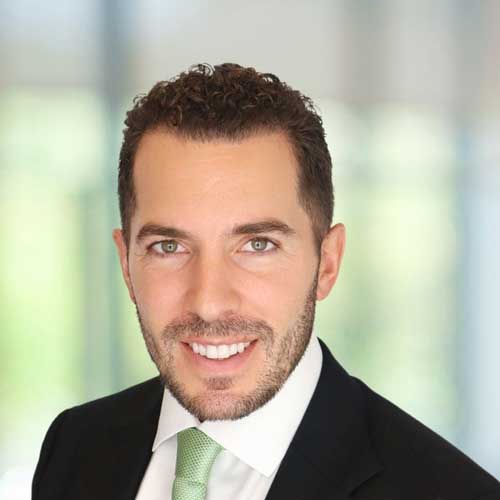
Scott was born in London, England, and spent most of his childhood and early adult years there. He was seven years old when his father died by suicide, leaving him, his older brother, Dan, and their mom.
His mom later met her partner, Jeff, who’s been a steady presence in Scott’s life since Scott was around 14, though not in a traditional father figure role.
Scott’s sharing his story with HeadsUpGuys to help other men and families process loss by talking about it.
Often when sharing my story, people feel especially sorry when they find out I was seven at the time. But honestly, being that age protected me.
A lot of it is a blur and some memories may be just what people have told me about the events. I recall being picked up from school with my brother by our neighbour. I can’t recall what we were told but it definitely wasn’t anything about his passing.
We were taken home to quickly collect our swimming things (we had a competition that evening) and then hung around seemingly endlessly at our neighbour’s house until we went swimming.
That evening, I recall coming home to see Mum. She didn’t say much, except that Dad wasn’t coming home tonight and that he was staying at a hotel.
The next morning I remember waking up and going downstairs to find Mum on the sofa, with her best friend Jennie (which was strange as she lived miles away). Mum was in tears and that is when she told me. I can’t really remember how, what she said, or anything else from the day, like whether or not we went to school.
That night, my brother was crying in his bed. But I couldn’t. I just didn’t feel the emotion that he clearly did. Which I remember feeling guilty for, and still do.
At the time, Mum recommended us to tell other people that our Dad died of heart failure, so that we wouldn’t have to deal with the judgement that tends to come with people knowing it was suicide.
The reality of what happened took a long time, years, to sink in. It’s only recently that I have begun to process it fully, which sometimes makes the pain worse. When I was seven I didn’t really understand what I had lost, my ignorance was bliss.
I don’t remember too much about my Dad, but I do know we were very close.
Everybody tells me how much he loved Dan and me. And I have seen videos of him with us and clearly he adored us. I look a lot like him, with darker features, whereas my brother Dan looks much more like our Mum (blonde with blue eyes).
Dan has always been particularly close to Mum. Whereas I always felt an especially strong bond with my father, and generally with his side of the family. I was very close to my Grandma (Dad’s Mum) and also my auntie (his sister), who I still speak with often.
Afterwards, I remember a lot of people at school being very nice to me, but that faded, and soon it was back to normal as people understandably moved on with their own lives. Our extended family also made noticeably more effort to see us early on.
We were lucky to go to some bereavement counselling. It was through an amazing charity called Winston’s Wish. Which I worked for as a volunteer years later. I assume it helped me and my brother a lot, though I was too young to truly recognise it then. I have no doubt though that it helped my Mum a huge amount. And helped us to share our experiences with other families who were suffering from equally tragic circumstances.
But generally speaking, as a family, we didn’t really talk about it. I guess it was too painful for us all, or we didn’t know what we could say that would help. We barely ever mentioned the word “Dad” and certainly never (even to this day) have I asked Mum what happened, why it happened, or any of the details.
It was the three of us just trying to get on with our lives as best as we could. We bottled it up and kept moving forward one step at a time. And the truth is that upon reflection, that approach of avoidance has definitely impacted us all (individually and collectively) to this day. I don’t blame any of us for that, we were just doing what we could to cope. But looking back I would certainly say it would have be best to address the topic, rather than avoid it.
I didn’t feel too much right away. I was young and fairly unaware of what had happened and the implications of it. I was carrying on with my life, focused on sports, school, and friends.
I invested a lot of my time and energy into sport. It wasn’t a conscious choice to help get through the trauma, but it certainly helped. I was a competitive athlete and competed at a high level in a few sports. That gave me discipline, motivation, distraction, pride, success and friendships. It also made my Mum’s life easier as it kept me away from doing naughty things or being a bad kid.
As time has passed my emotions have changed significantly about the loss. Lots of pain, sadness, loneliness, emptiness, hopelessness. Not too much anger or resentment, but from time to time I must admit I do feel it.
For the most part I’ve been figuring things out on my own, coping and dealing with it in the best way that I can. Even now, I have people I hold very dear to me and people who know my story. But they naturally don’t know how to help or often how to act. And so it’s generally up to me to deal with it, typically in silence and with resilience; sometimes avoidance.
I have sought help of therapists and also have started to open up to religion. But mostly it is a case of me dealing with it on my own. And I suspect it’s the same for my Mum and brother too, although we don’t talk openly about how each of us copes with it.
In 2015, I decided to run a marathon and raise money for charity, naturally I thought of Winston’s Wish who had helped me and my family before.
I realised that I wished that I had had more help and support at the time of my Dad’s death. So I wanted to see if there was a way I could help them to enhance their programme to better support others.
One such way was introducing an adolescence and young adult grief support programme. They were very focused on supporting children, which I understand, but my advice to their board at the time was that children are protected by ignorance and a lack of awareness of reality, whereas teenagers and adults (whether the trauma happened when they were children or more grown up) process it directly, and are impacted as much if not more than children. But by that age, everybody assumes they are ok and can deal with it alone. Which isn’t true.
Firstly, if I can give a legacy to my father of helping others to avoid the same situation or cope better with it, then I would be proud to do so.
Secondly, I realise how important it is to process and deal with trauma. I want to share my story and not keep it hidden.
Finally, above anything, I am passionate about men’s mental health. My sense (whether it’s right or wrong) is that men as a whole are sometimes wrongly neglected or even vilified in modern society. I think the role, appreciation for, and wellbeing of men globally is suffering significantly.
Huge damage is being done to men’s mental health right before our eyes. I know firsthand the devastation and desperation it can cause if it continues to be ignored. And I know how delicate, fragile and unstable the pendulum is between men feeling “ok” or “content” vs feeling lost, insignificant, or insufficient. And so if I can help, even in some small way, to reduce this crisis, I would be glad to.
I also hope that my story helps the people who may be struggling with thoughts of suicide. I once read a book which really resonated with me, Greenlights, by Matthew McConaughey. I would strongly recommend it for anybody, especially men, to read. The strapline of that book, “just keep livin’”, is what I would have said to my father, above anything else, if I had had the chance. Life always works itself out. Issues are always resolved. Things always get better. So just keep livin’.
I would trade each and every thing I own to have had my father in my life. And I have no doubt that my life would have been much happier, more joyful, more peaceful, more fulfilling, more successful, more loving, more affectionate, more fun, more adventurous, more friendly, and all around just much better, had my father not died by suicide.
Those who die by suicide are generally doing so because they are convinced it is what is best for the people they love, because they are sick. We would never judge, be ashamed of or resentful towards a parent if they passed from a physical illness, so we equally should not for a mental illness.
NEVER feel ashamed, judged, or resentful about it. There is significant stigma relating to suicide, but I would hope others can acknowledge and process the situation more than my family and I did.
Do not bottle it up or avoid it. Deal with it head on and process the trauma upfront. It will be hard, but it will significantly help in the long term and prevent it from defining your life.
It’s the only way to ensure your life can be defined by yourself, rather than by your trauma.
Suicide is cruel. It can leave the families broken – not just immediately, but for their entire lives. My sense though is that it’s always best to be honest and upfront.
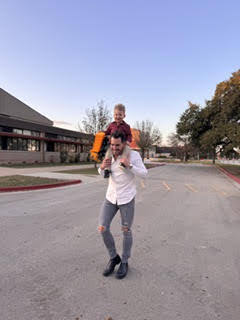
We all did our best at the time, but I do wish somebody had been more upfront with me about it all. Explained to me the reasons, the impact, and the realities, so that I could process it at an earlier stage rather than later in life. I also wish that I had felt more presence, love and support throughout my life, in particular at certain stages. To help to fill the void to some extent that my father left. Again, we all did our best, but the reality is there was a gaping hole left in our family and I have felt that each and every day since my Dad’s death.
I hope sharing my story and experiences helps others to realise they are not alone.